
There is a particular kind of silence that experienced vocational educators know well. It happens when a learner encounters their first genuinely difficult conversation, and everything they studied simply leaves them. Not because they didn’t learn. But because knowing and doing are two entirely different things. Scenario-based training exists to close that gap. And AI characters are changing what that looks like entirely.
What Is Scenario-Based Training?
Scenario-based training (SBT) is an active learning method that places learners inside realistic, simulated situations where they must make decisions, respond to challenges, and experience the consequences of their choices, all without real-world risk.
Rather than passively absorbing theory through lectures or reading materials, learners engage directly with the situation. They practise. They make mistakes. They try again. This practice-based learning approach mirrors the conditions of actual work far more closely than any textbook exercise can.
For professions where a wrong response can cause genuine harm, that difference is not a marginal gain. It is the difference between a worker who is qualified and one who is genuinely work-ready.

Why Traditional Roleplay Training Falls Short
For decades, scenario-based training in vocational education has meant one thing: roleplay with a human actor or a fellow learner. A trainer plays the difficult client. A classmate pretends to be in crisis. The learner responds.
The intention is sound. The execution is full of friction.
Skilled actors cost money and are rarely available on demand. Scheduling live roleplay sessions becomes a logistical burden for educators. Human participants fatigue after a handful of repetitions, which means practice is limited. And critically, the quality of the learning experience depends entirely on how convincingly the person playing the role performs.
Add to this the well-documented problem of psychological safety. Many learners feel inhibited practising difficult conversations in front of peers or instructors. The fear of being judged, of saying the wrong thing, of appearing incompetent — it suppresses exactly the kind of experimental, trial-and-error behaviour that scenario-based learning requires to work.
The result is training that looks like practice but functions like performance. Learners manage the session, rather than genuinely engaging with it.
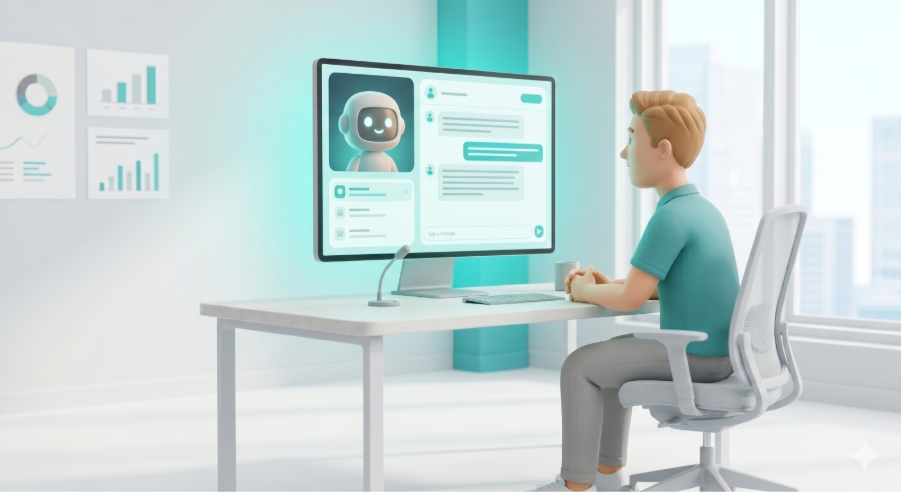
AI roleplay training addresses each of these limitations directly. Rather than relying on human availability, consistency, or willingness to play difficult roles, AI characters can be deployed at any time, at any scale, without fatigue, without variation in performance, and without the social pressure that inhibits honest practice.
But the real shift is not logistical. It is experiential.
Modern AI persona training does not present learners with a chatbot running through a script. Purpose-built AI characters for vocational education are developed with psychological depth, with backstories, emotional triggers, behavioural patterns, and realistic responses to stress. When a learner tries an ineffective approach, the character responds the way a real person would. When the learner gets it right, the character shifts accordingly.
This is what makes practice feel real. Not the technology. The character.
A learner practising de-escalation training for a corrections environment is not checking boxes on a flowchart. They are navigating a person who is guarded, volatile, and responds to tone as much as content. The AI character does not give the learner an easy out. It behaves like the situation demands.
The Sectors That Need This Most
Simulation training for vocational education is valuable across many industries. But it is most consequential in the professions where interpersonal mistakes carry the heaviest cost.
Mental health services. Practitioners learning to conduct suicide risk assessments, manage acute distress, or respond to sensitive disclosures need to practise these conversations many times before they encounter them in reality. High-stakes communication training in these contexts cannot wait for a placement. AI characters provide a safe practice environment where learners can develop genuine competence before the stakes are real.
Youth protection and community services. Working with young people in crisis demands both technical knowledge and deeply practised interpersonal skill. Scenario-based training with AI characters allows learners to explore these situations repeatedly, developing the kind of emotional regulation and strategic communication that on-the-job experience alone cannot build fast enough.

Corrections and justice. De-escalation training for corrections environments is among the most demanding in human services training. Officers and case managers must remain composed, read behaviour accurately, and choose responses that reduce risk rather than amplify it. AI persona training can simulate exactly these interactions, including characters who are hostile, unpredictable, or operating under the influence of substances, scenarios that would be genuinely difficult to replicate with human participants.
Healthcare and residential care. Managing patient aggression, responding to family distress, or navigating ethically complex conversations requires both clinical knowledge and communication skill. Immersive learning for high-stakes professions like healthcare gives learners the repetition they need without exposing real patients to the cost of inexperience.
What Makes Scenario-Based Training Work
Not every scenario delivers learning. The difference between a simulation that changes behaviour and one that learners click through and forget comes down to design.
Effective scenario design for AI roleplay training starts with a clear understanding of what the learner needs to be able to do, not just know. This means identifying the specific decisions, responses, and judgement calls that separate strong performance from poor performance in the actual job. Those moments become the architecture of the scenario.
Characters need to be grounded in psychological reality. A trauma-informed AI character for youth services training should not simply say difficult things. It should behave in ways that are internally consistent, guarded one moment, briefly open the next, reactive to specific triggers in the learner’s language. This psychological depth is what produces genuine learning transfer, because the learner’s nervous system experiences something close to the real situation.
Branching scenarios, where the character’s responses shift based on what the learner does, produce the strongest outcomes. Each choice has a consequence. Effective de-escalation leads somewhere different from a poorly chosen phrase. Learners see their decisions play out in real time, which is the mechanism through which decision-making skills actually develop.
Immediate feedback, built into the experience rather than delivered separately at the end, reinforces the right approaches and gives learners a clear understanding of why a particular response worked or did not.
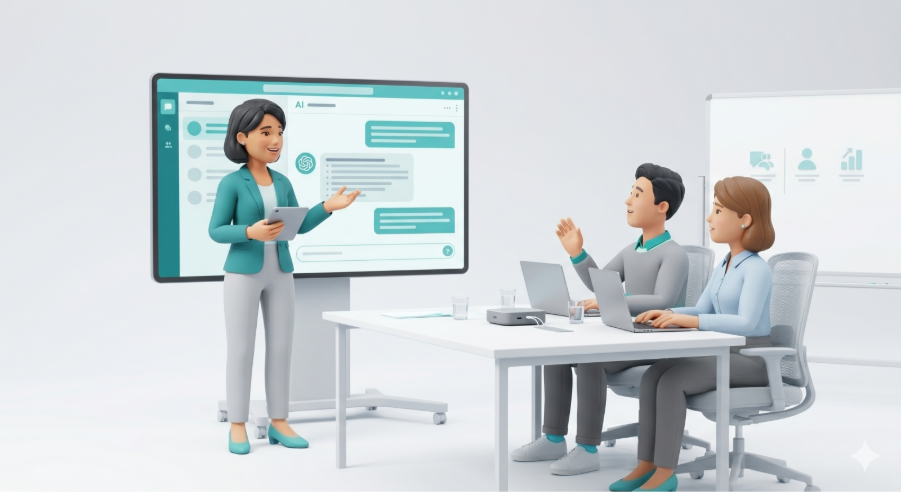
A common concern about AI characters in vocational training is that they replace the educator. They do not.
Conversational AI in education functions as a practice infrastructure, the equivalent of a flight simulator for human communication. Pilots do not stop needing instructors because simulators exist. The simulator allows them to arrive at instruction with vastly more experience, having already made their first hundred mistakes in an environment where those mistakes cost nothing.
The educator’s role shifts. Less time is spent running repetitive roleplay exercises that produce inconsistent results. More time is available for facilitated debriefs, critical reflection, nuanced feedback, and the kind of contextual guidance that no AI character can replicate. Educator-controlled scenario design means training professionals continue to shape every aspect of what learners encounter, the character, the context, the competency framework, and the assessment criteria.
From Practice to Performance
The goal of scenario-based training has always been the same: to produce learners who can perform under pressure, in the real world, in situations that matter.
The challenge has always been that realistic practice is expensive, logistically difficult, and emotionally complicated, for learners and for the people asked to simulate difficult scenarios on their behalf.
AI characters do not solve every problem in vocational education. But they solve the right one. They make it possible for every learner, regardless of location, schedule, or access to specialist instructors, to practise the conversations that will define their effectiveness in their chosen field. Repeatedly. Safely. Honestly.
The learner who once fell silent when the scenario became real now has somewhere to build the muscle memory that silence was hiding. And by the time the conversation happens in the real world, it is not the first time they have had it.
It is just the first time it counts.